
Home / The Old Fox: Case Files
 Watch on YouTube
Premieres 31 October 2026 at 3pm UK time
The Old Fox: Case Files · Episode 8
The Con Man Who "Sold" the Eiffel Tower
Victor Lustig is famous for selling the Eiffel Tower for scrap, twice. The Old Fox tells the legend, what can and can't be checked, and how Lustig ended up on Alcatraz.
- In 1925, according to the best-known accounts, Victor Lustig posed as a French government official and persuaded scrap metal dealers that the Eiffel Tower was to be sold for scrap (Wikipedia, 'Victor Lustig'; Smithsonian Magazine).
- The dealer André Poisson is said to have paid for the tower and a bribe, and to have been too embarrassed to report it; Lustig is said to have returned to try again before fleeing to the United States (Wikipedia; Smithsonian Magazine).
- These details come mostly from later books and Lustig's own legend, so they are hard to verify (Wikipedia, citing 'The Man Who Sold the Eiffel Tower' by Johnson and Miller).
- Lustig was arrested in New York in 1935 for counterfeiting, escaped, was recaptured within a month, served time on Alcatraz and died in federal custody in 1947 (Wikipedia).
🌐 https://theoldfoxtalks.com
Watch on YouTube Follow on TikTok
Share this story
What the fox said
How do you sell something that isn't yours? Pick something very, very big. Let's see what's on.
Paris, 1925. Or so the story goes. A smooth con man called Victor Lustig reads that the Eiffel Tower is costly to keep up.
He has official-looking letterheads printed. He is now, he says, a deputy director at the Ministry of Posts and Telegraphs.
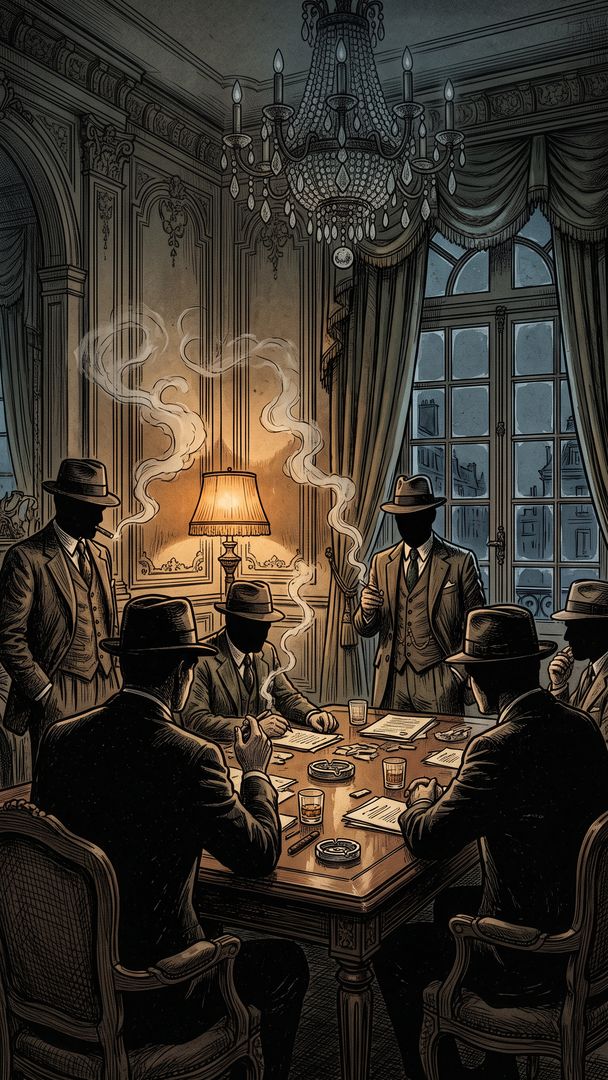
He invites a handful of scrap metal dealers to a confidential meeting, at an expensive hotel.
The news, he tells them, is top secret. The tower is to come down, and be sold for scrap.
One dealer, André Poisson, wants it badly. He's keen to make his name among the big men of Paris.
Lustig hints that a civil servant's pay is rather modest. Poisson takes the hint, and pays a bribe on top.
Lustig takes the money and catches a train to Vienna.
And Poisson? Too embarrassed to go to the police.
So, the story goes, Lustig comes back and tries it again. This time the police hear of it, and he slips off to America.
There, he turns to counterfeiting. In 1935, he's arrested in New York.
He escapes from jail, and is caught again within a month. He ends up on Alcatraz.
He died a prisoner in 1947. And the Eiffel Tower? Still standing.
He sold it twice, and it never moved an inch. Case closed. Keep your nose to the wind.
Sources
- In 1925, according to the best-known accounts, Victor Lustig posed as a French government official and persuaded scrap metal dealers that the Eiffel Tower was to be sold for scrap (Wikipedia, 'Victor Lustig'; Smithsonian Magazine).
- The dealer André Poisson is said to have paid for the tower and a bribe, and to have been too embarrassed to report it; Lustig is said to have returned to try again before fleeing to the United States (Wikipedia; Smithsonian Magazine).
- These details come mostly from later books and Lustig's own legend, so they are hard to verify (Wikipedia, citing 'The Man Who Sold the Eiffel Tower' by Johnson and Miller).
- Lustig was arrested in New York in 1935 for counterfeiting, escaped, was recaptured within a month, served time on Alcatraz and died in federal custody in 1947 (Wikipedia).
Spotted a mistake? Tell us in the YouTube comments and we'll correct it.