
 Watch on YouTube
Premieres 30 October 2026 at 3pm UK time
The Old Fox's Library · Episode 8
Vikings Never Wore Horned Helmets
Horned helmets are the Viking look everyone knows, but the best-preserved Viking helmet ever found has no horns at all. The Old Fox traces the horns back to a Danish bog nearly 3,000 years old and to an 1876 opera stage. Sources are listed on our website.
- The Viking Age is usually dated from the late 700s; only one preserved Viking Age helmet is known, found in a warrior's grave at Gjermundbu, north of Oslo, in 1943, and it has no horns (National Museum of Denmark; Museum of Cultural History, Oslo).
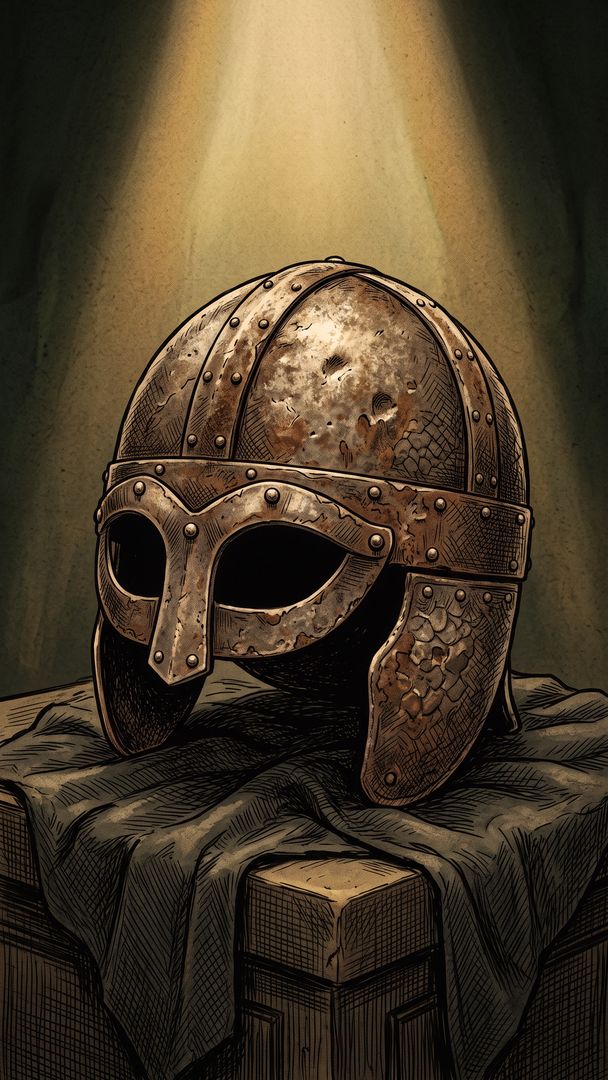
- The Gjermundbu helmet is a rounded iron cap with a guard around the eyes and nose; the National Museum of Denmark notes horns would have got in the way in battle and on crowded ships.
- The horned Viking image grew out of 19th-century Romantic art and was fixed by Carl Emil Doepler's costumes for the first Bayreuth production of Wagner's Ring cycle in 1876; within about 20 years horned helmets were a common symbol of Vikings (Roberta Frank, 'The Invention of the Viking Horned Helmet'; History.com).
- The famous horned bronze helmets from Veksø (Viksø), Denmark, were found in a bog in 1942 and have been dated to around 900 BC, long before the Viking Age (National Museum of Denmark; Aarhus University research reported by Archaeology Magazine and Smithsonian Magazine).
🌐 https://theoldfoxtalks.com
Watch on YouTube Follow on TikTok
Share this story
What the fox said
Pull up a chair. Tonight's page: the Vikings' horned helmets.
Picture a Viking. Big beard, round shield, and a helmet with two great horns. Almost certainly wrong.
The Viking Age began about 1,200 years ago, with raiders and traders from Scandinavia.
Only a handful of Viking helmets have ever been found. The best preserved was dug up on a Norwegian farm in 1943.
It's a plain, rounded iron cap, with a guard around the eyes. No horns. Not one.
As museum experts point out, horns would be a nuisance in a fight, and a menace on a crowded ship.
So where did the horns come from? Partly from nineteenth-century artists, dreaming up a wild and romantic North.
Then, in 1876, came Wagner's Ring operas. The costume designer, Carl Emil Doepler, gave some of its heroes horned helmets.
Within about 20 years, horns meant Vikings, in paintings, advertisements and children's books.
Real horned helmets do exist. Two bronze ones, found in a Danish bog, date to around 900 BC.
That's more than 1,500 years before the first Viking raid. Wrong people. Wrong age.
One to keep: the Viking look we all know was largely dressed up for the stage. History, in fancy dress.
Close the book. Keep your nose to the wind.
Sources
- The Viking Age is usually dated from the late 700s; only one preserved Viking Age helmet is known, found in a warrior's grave at Gjermundbu, north of Oslo, in 1943, and it has no horns (National Museum of Denmark; Museum of Cultural History, Oslo).
- The Gjermundbu helmet is a rounded iron cap with a guard around the eyes and nose; the National Museum of Denmark notes horns would have got in the way in battle and on crowded ships.
- The horned Viking image grew out of 19th-century Romantic art and was fixed by Carl Emil Doepler's costumes for the first Bayreuth production of Wagner's Ring cycle in 1876; within about 20 years horned helmets were a common symbol of Vikings (Roberta Frank, 'The Invention of the Viking Horned Helmet'; History.com).
- The famous horned bronze helmets from Veksø (Viksø), Denmark, were found in a bog in 1942 and have been dated to around 900 BC, long before the Viking Age (National Museum of Denmark; Aarhus University research reported by Archaeology Magazine and Smithsonian Magazine).
Spotted a mistake? Tell us in the YouTube comments and we'll correct it.